
UK passport travel to Europe: EES and ETIAS explained
For a short visit on a UK passport, check the Entry/Exit System (EES) and European Travel Information and Authorisation System (ETIAS) separately. They serve different purposes. This page reflects the official information checked on 14 November 2026; check it again before travel.
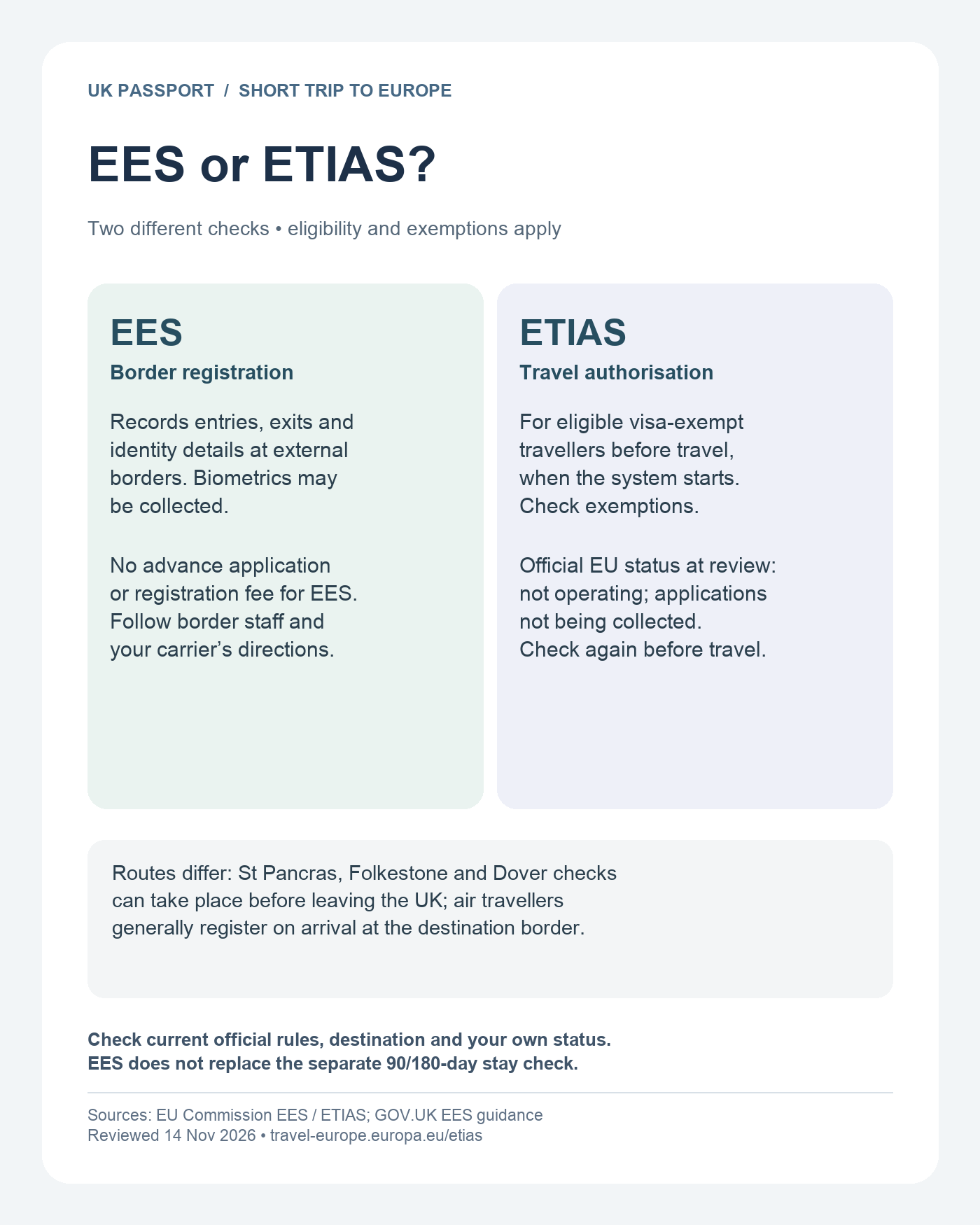
EES: registration at the border
The EU says EES became fully operational at the external border crossing points of countries using it on 10 April 2026. Depending on your circumstances, border officials may record passport details and biometric information such as a photograph or fingerprints. GOV.UK says EES registration requires no advance application and is free. Exemptions exist, including for some people with residence documents; check the official list.
For Eurostar from London St Pancras, Eurotunnel at Folkestone and the Port of Dover, GOV.UK says checks take place before leaving the UK. Other routes may have checks at arrival. Follow your carrier’s instructions and allow time for the border.
ETIAS: a future travel authorisation
At the time checked, the EU says ETIAS is not operating and applications are not being collected. The EU will announce the start date. Do not assume an older projected launch date is confirmed; use the EU’s official ETIAS page for updates and eligibility, including exemptions.
Check the destination and your own nationality or residence status: Ireland and Cyprus do not use EES. For short stays subject to the Schengen 90/180-day rule, track your previous visits separately.